On the Movement of Travel
Since the beginning of time — human history, that is — people have moved, traveled, and spread across great areas. First on foot, then by animal, and now by cars, trains, and airplanes. The Industrial Revolution has made travel quite easy, and it seems everyone is doing it. Some for work, some for play, and others just because they have no home currently and travel is the only way for them to live comfortably at the moment. We call these people nomads, homeless wanderers — but are they really? We look at home, concepts, and time in this article as we move forward, gathering through space.
Nomads
Originally these were people who moved for food, shelter, and weather — migrating to more hospitable climates and regions throughout the year. Like early settlers in the Fertile Crescent or parts of the Americas. They followed large animals or rains and were able to maintain a population through travel and movement, following patterns of nature their ancestors had observed and planned around. This early culture was nomadic by choice but also by necessity, and it formed the beginnings of all culture on Earth.
Perhaps it is this old version of ourselves that loves travel today — seeking out new foods and places with better weather to break up the monotony. The ever-present search for greener pastures is real in the modern brain and life of humans. We look online on Instagram for fun places to go, and tell our friends "I'm going there," and off we go — and then we find a new place, and a new one. And some people break this pattern and just go to the same two or three places their whole lives: Long Island for summers, Miami in winter, and Spain for the fall. They pick a season and a place and make it a habit, like migrating birds picking the right spot for the right time of year to settle for a bit.
But not all humans can travel now, with the way work and life and money are. We give so much focus to stress and fabricated needs that a lot of people just sit in one place their whole life and fester, unable to go anywhere. Now, this is fine if you live in rural Spain, in the north, and you have a sheep herd and a simple life and few worries. But in America you have debt and bills and work, and time off is scarce. We have bred ourselves to have no free time, and to use the time we do have for recreation in a way that does not serve our highest selves — mostly consuming popcorn and snacks and movies to pass the hours between work and other obligations. The fun is nearly gone, and consumerism takes hold of almost every part of life.
Getting out
This is why leaving is so key for Americans. We need the perspective — the slower pace of life in other places — to really understand how crazy the rat race is, how unfounded the ideas of modern culture really are, and what we are up against as a species. The total extinction of the culture we have built really comes from one thing in the end: our minds, and their ability to adapt to real-world problems and turn them into solutions instead of roadblocks to our future selves.
A million years ago we existed; the Earth was so different, and yet we persisted. And 10,000 years ago the ocean was 300 feet lower and the climate was all sorts of ways, and we still existed; and even when all that changed again and the ice age ended and we migrated, we still existed — and do today. So where is the problem?
Our mindset
We have been told that if the world were to rise in temperature just 2°C, we would all die. But humans have been here forever, gone through so many changes, with so much less technology — and even right now, people live in 50°C heat and down to -70°. The idea that the fertile, temperate regions of the world would shrink so vastly that no one could live there — and that nowhere on Earth becomes more hospitable at the same time to offset the loss — is just bad science. Everything we see today is based on millions of years of change already. Every blade of grass came from somewhere, moved and shifted, adapted and grew new roots in new landscapes, and then died and moved on somewhere else. The seeds of plants and the ideas of people pollinate and change and adapt. We have so much capacity that, quite frankly, we don't even touch.
So where do we go? When all the ice has melted and the glaciers go away, will there be a home? I don't think it's that dire. As James Lovelock's Gaia theory puts it, we live on a living, breathing planet that responds and rebalances in real time. This is real: the Earth has cycles and currents and breath that dictate seasons and patterns of weather that are always changing and moving. The pace is slow, and perhaps we have expedited the next phase, but it's going, and I'm not afraid. If one place becomes less friendly in summer, another will be friendlier. And so the nomads return.
The problem
People still need to look at use, pollution, waste, and sustainability, but a lot of that is about human health, not climate. Using so much fuel and doing so many things we don't really need to be doing because it makes us money is maybe not the ideal. But we can unlearn that. The problem is that we are also afraid of the change. We are so far from the land and the seasons as a people in the US that we forget that nature wants to change — thrives on it — and that maybe we are just helping it along.
As I go from one climate to the next, tasting food from region to region, I realize that just one valley over, you might have a whole new thing going on. New foods, new climate. And it's so unique to every place. Of course, if over five years that all shifted, that's a big change — but in reality we are looking at 40–50 years of change to move things that far. I remember when I was in school in 2007 and people thought oil would run out that year or the next, and that all humans might have to go live in Alaska or New Zealand to escape climate change. Didn't happen. And yet people have purchased land hoping it might — hoping this mass migration might occur sooner rather than later — and they want to be ahead of it.
Follow the billionaires
So where are they moving? Well, interestingly enough, to these green zones that are deemed safe in the apocalypse of climate and/or nuclear fallout: Wyoming, Hawaii, Canada, remote islands somewhere that no one has heard of. They have already started building compounds in these places to hedge the bet of climate change. But will it happen? Time will tell. But obviously they know something is up and are responding.
The change
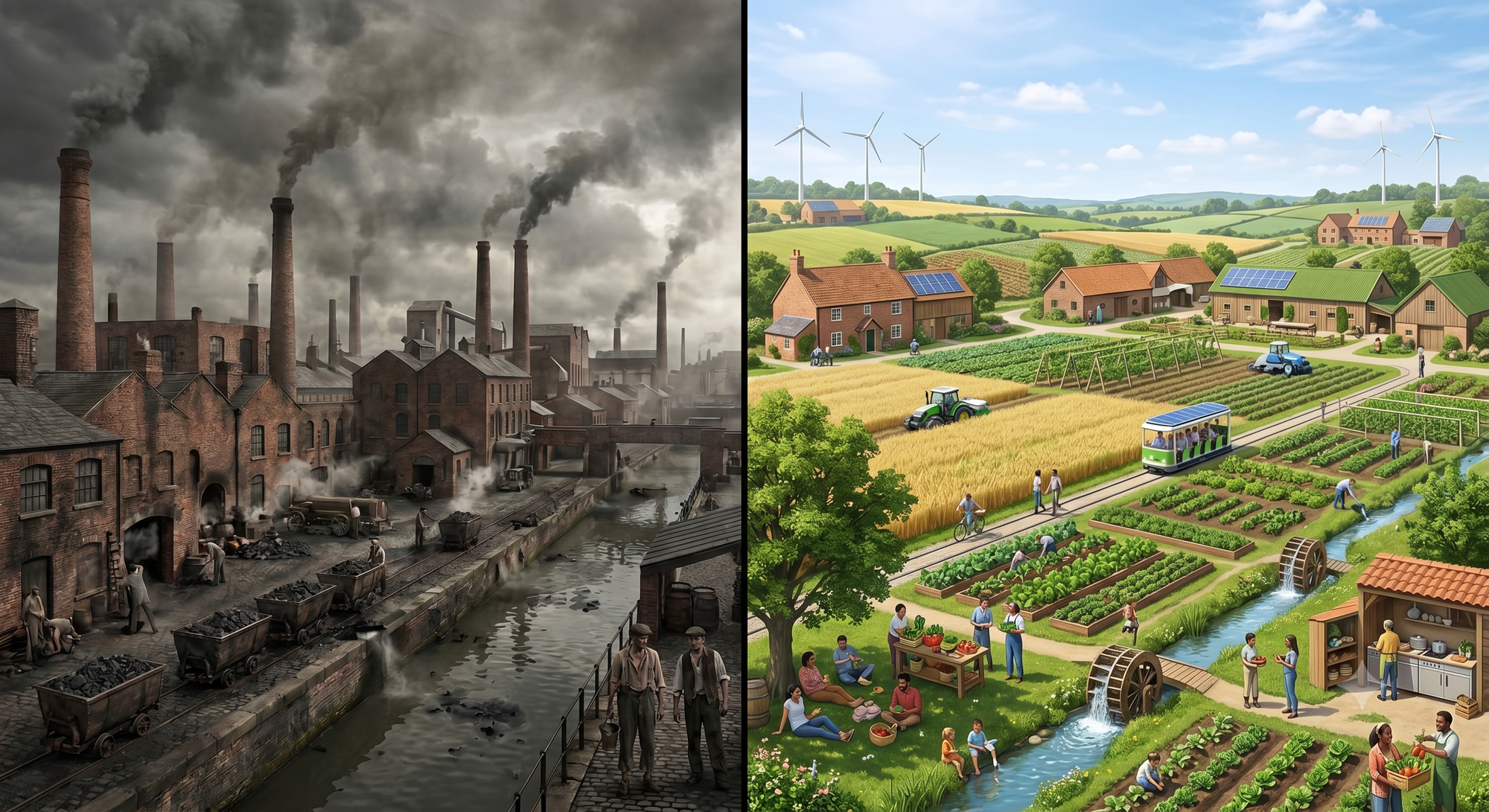
I think the change we most need to make as a culture is toward this question: what is our purpose as humans? What do we want, and what do we really desire? Do we want this never-ending consumption to continue? For AI to just be another rat race? Or do we want to slow down and do less and see more and enjoy more of what life has to offer? We are the future of America and the West; we choose the direction. So I hope, for our children's sake, that we make better choices as Millennials and Gen Z to shape a future that makes more sense for everyone. Until then, let's travel and see what already exists and learn from that: the places and people that make this world so great. Only through acceptance can we get anywhere anyway.
Love
In the end, I love to travel. I love to see new things, but I also love to bring it home and shape the places I live with this knowledge. It's an archetype as old as time: the traveler, the mystic, the sadhu, the saint bringing a blessing back from his pilgrimage. It feels right to be on this journey for now — to see the world and learn its mysteries and share that later with the people I touch and connect with in this life. To write this blog and my stories down on paper and share what I have learned with the world.
Ciao for now,
Jonathan (from Italy)