Protein, Calories & Fasting: Myths
Join us as we go into some of the myths of modern nutrition and how to change your body mind connection with food.
In the Beginning:
One of the most salient things we know about early human history is this: that humans feasted and fasted. They gained weight and lost it, in large amounts, due to seasons, food supply, and shortages in water resources and game. We did not, at any time until the modern supermarket showed up, have a consistent supply of fresh, ready-to-eat food year-round. We learned to preserve things, yes, but even that was quite far down the road evolution-wise; before that we did fermentation, and before that we just dried and smoked and buried things for winter. So the point is:
We didn't have choice....
We had burden and weight and desire to eat, but not a steady supply — not until at least early agriculture, and even then we had good years and bad years, and people ate a lot or did not. You can look at the histories of every culture and see that famine was one of the main plagues people spoke about. Lack of food was real. But here's the thing: it wasn't a bad thing.
Fasting
It turns out that when you starve the body for hours, days, and weeks, you change — on the cellular level — how the body responds to stress. You activate blood platelets and stem cells and scavenging hormones that rid the body of cellular debris. Ancient civilizations knew this and adopted fasting for wellness long before modern biomedicine caught wind of what it could do. For instance, in the art of Kripalu in India, you fast for months to heal the body. Part of what they knew happened was that your organs shrink, and in shrinking, when you eat again, they regrow. This 10–20% new cell growth means that organs and tissues are reborn, and you have fresh heart/liver/skin cells — whatever they may be — for years to come. This was common practice in India as a rejuvenation technique, and it is mirrored in the animal kingdom as well:
Bald eagles
An emblem of the West, the bald eagle — unbeknownst to many — has an interesting habit where it will, at a certain age, decide that its beak is too much and be unable to hunt and eat properly. So it undergoes a transformation: it stops eating for months and will hurl itself at the ground to break off its beak entirely. It's only through this throwing away of the body that it then regrows, and the eagle is able to live more years in health and wellness, hunting and eating well.
So how does it know to do this? And how do humans know, on some level, that fasting and calorie restriction are key to health?

The downside
Now, we all know that in the '90s, bulimia and other disorders were on the rise. The West got addicted to having people who were skinny and small and slender, like in the magazines. And all of a sudden, kids in schools across America stopped eating and threw up to get skinny. This didn't stop with women, but men often did a better job of hiding it. This body-dysmorphia trend stays with us today, due to our fascination with thin women and ripped men, despite there being no medical reason to push people to these limits. Or is there?
The truth is that when you starve yourself out of hate, out of a denial of being well, it's a far cry from medically assisted fasting or a spiritual cleanse. I would never tell someone with body dysmorphia to fast for vanity. But it could be a good way to swap out one bad habit for a better one: normal eating 90% of the time and fasting just 10%, versus a complete removal of calories from their diet.
So how did we get here?
The truth is that we don't know who started this fad. Was it models in the '20s showing skin? Or pharmaceutical companies wanting sicker people? Regardless, we got hooked on "less is more," and we forgot that the FEAST part of the equation was key. The body enjoys dynamics, and just like lots of cold without any heat, or too much sugar without any protein, we get imbalanced. So how do we fix this? Knowledge and understanding of what works now and what worked in the past.
History
The real art of fasting, I think, comes from native peoples who simply saw that if they ate a lot when there was food in season — taking in those readily available nutrients and compounds — and then fasted in the months when there was less, they both had to work less to find food and felt pretty good. Nature has a cool way of putting exactly what you need in the food around you. Having blueberries that cool you down show up in summer is handy, isn't it? And having starches that warm you up, ready before winter and able to last all those months, is also quite neat. All farmers know this: the garden has a wisdom that we don't really understand until we actually use it ourselves as our medicine cabinet.
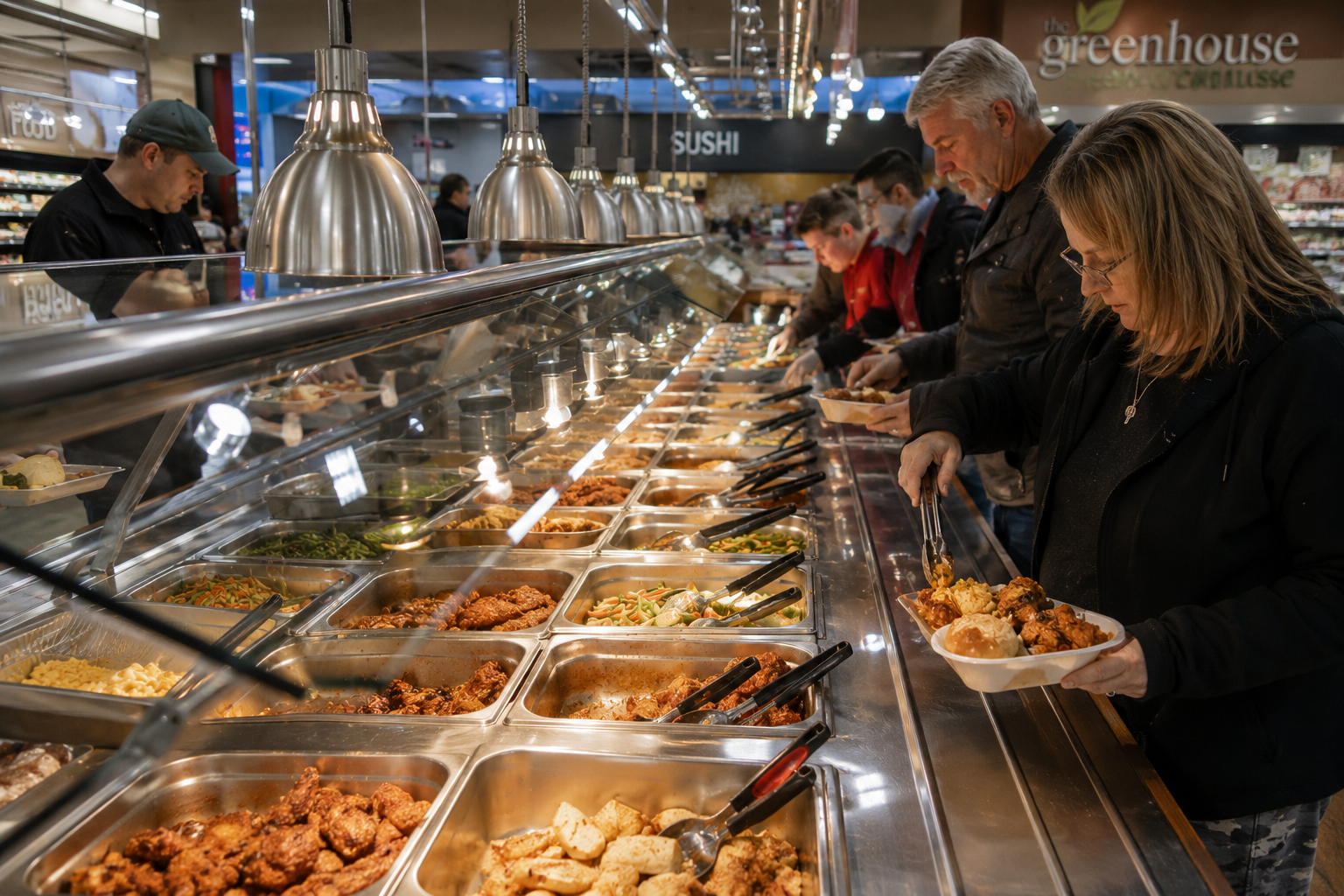
So how do we use it? Well, first: EAT LOCAL. That means actually go out and eat what's growing where you live, when it's growing. Don't go to shops and buy old stuff shipped from far away. Eat the seasonal produce with the local microbes on it. And you'll see a difference.
Then, beyond this, look at life like a microcosm. See that when you eat local and in season, and within reason of what makes sense, you actually help balance the glut and famine of the ecosystem you're in. We have all become addicted to having whatever, whenever — and actually, this is really hard on the soil and the plants and the people who grow them. This demand for at-our-fingertips food always being there is so shallow, because it doesn't beg the questions: Do I need this? Is this reasonable to even want?
Popcorn can store, rice can be kept, but things like apples, oranges, and citrus are not year-round in most places — and this lack of summer sugars lasting into winter makes sense. You only need these high-sugar, cooling, light foods when it's really warm out and your body wants to thin and cool the blood, and you're not eating high-calorie meals. Eat smoothies all winter and tell me how you feel after a month of that. And yet we do it. We get hooked on fad diets and trends and start buying things out of season, eating oranges all winter as if that's the best thing to do in Idaho, where they don't grow, because TikTok said I'd lose weight. The reality is that winter is when you want the weight — to sleep, and to gain some yummy food calories to sustain yourself through the cold. Unless you're somewhere that never gets cold, like LA, that's another story.
Seasons
So we have four in many places, but six in some and two in others, and occasionally basically one. Figuring this out is key to local eating and fasting in general. If you live in Hawaii, with basically a wet and dry season, you probably just need to focus on warming/drying foods versus hydrating and cooling ones, and the subtlety is less important. But the cool thing is, there you can fast kind of whenever, because the climate is so mild. In the West we have five or six depending on the area, and in the NE you have the typical four, where you might want to only really fast in summer and spring and bulk up in the others.
I bring this up because people often think that time = seasons, and it doesn't. What's true somewhere in June may be the opposite in another place. So if it's foggy all winter in Juneau, Alaska, but foggy all summer in SF, we need to adapt the idea of a summer/winter diet, don't we? The intricacies are simple if you live close to the land — the food actually pops out, telling you what's up — but as soon as we go to the city, stop growing things and seeing things, and just buy them instead, we lose this dirt connection and start needing guides. So here is your guide:
- If it's wet out, eat drying, astringent foods.
- If it's cold out, eat warm foods.
- If it's hot out, eat light and cooling foods.
- If it's dry out, eat hydrating and nourishing, oily foods.
Pretty simple — but you'd only expect people to need this if they can't see that nature already basically grows what you need, when you need it, in most places.
So how do I do this?
You need to first look around you, find some farmers or some land, go to markets and talk to people, and see what your food web is. Then, once you have that dialed in, you can go to the markets and buy things and start cooking with them and tasting the seasons yourself. And then, after a few months of this, play with calorie limitation in the seasonal sense, and do intermittent fasting for a day or two — and if you want to go farther, try a week or so to do a proper cleanse. None of this is mandatory, but I highly recommend it for anyone really wanting a shift. Cleansing has changed my life, and I think fasting is the #1 medicine given to us, other than plants and herbs and functional medicine. It's free and powerful and a great adjunct to a meditation practice, yoga, and the healthy lifestyle trends you might already be doing.
Why not try it today?
So, back to the protein myth part
First off, we need to start with what a calorie is. And it's not what you think. At some point there was a guy with a lab and a flame, and he said, "How do I know how much energy is in a food?" He knew that candles burn at a given rate, and that wax versus oil gave off different heat, so he devised some sort of scale (a kilocalorie): basically, the amount of energy needed to raise one liter of water by one degree C. Now, this makes sense, I think, for jet fuel or propane or even firewood, because you literally use them to heat or move something through space, and the heat and thrust and function of it all makes sense. But the problem when you apply this to calories in food is this: the body is not just a jet engine needing fuel. We have biology and mechanical digestion in between food and the energy we get from it. Let me explain.
So, in the lab version, you take an apple and you break it down into ratios: carbs, fats, proteins, salts, etc. And you figure out it's 65% sugar, or whatever it is, and then you desiccate it to a powder, and then you burn that powder to release heat, and then you measure how much heat that burnt powder released by how much it raised the temperature of the one liter of water it was heating, and then you do some math and figure out that, well, it has 75 cal per oz, and 65% of that was carbs, so it's got X amount of calories of sugar, etc.
We do this same thing for steak, or eggs, or oils. Even though this is not how human digestion works at all…

The truth
Your body has mechanical, chemical, biological, and microbial processes that help in digestion. Your mouth, with the addition of amylase and other compounds, chews and breaks down simple sugars right there. These compounds then go to the gut, where bile and pepsin and all sorts of other things interact with it to massage and acidify, then alkalize, the foodstuff (called chyme at this point) into something that the little hair-like villi of the small intestine can pick up and "digest" into usable energy. Basically, the whole digestive tract is massaging, moving, and chemically treating the food. But this is not all: you also have 5–6 lbs of microbes breaking down the food and making sure you get everything you want out of it before it's gone, and the waste products are sent off to return to the soil (well, originally). So how on earth did we get from this to some Bunsen burner melting food to count kilocalories?? I'll tell you: white men who didn't understand the body. The same guys that broke most of Western medicine into pieces and never put it back together properly. We got hooked on reductionist thinking, and not on what matters — whole-systems thinking, where the body and the ecosystem and your mind and surroundings are all one organism that is thriving, or not.
In fact, the soil can't do well without the plants and organisms and animals that it's interacting with being in balance, and those organisms can't thrive without the healthy soil. It's a food web, and we are one member of it — not the lords of its castle, sitting on the hill, not caring at all about our impact and where we fit in all of it. But we put ourselves there, removed and estranged from the way life actually works and our rightful place in the web we created eons ago with all the other mammals and plants we have tended into being what they are today.
Did you know that when they really looked, they realized that the whole Amazon rainforest — the largest ecosystem on earth by biomass — was planted? It was a garden of early humans that evolved, from the co-tending of nature with purpose, into a medical panacea and food sanctuary that we now bulldoze to buy cheap meat and palm oil from. How sad — millions of years of evolution gone, to grow things that honestly people don't need so much of, and replacing things that they could use a lot more of, in fact.
I love food and all its complexities, but it's really important to make this clear: humans need to look at their intake and how they shape the world with these food choices. It's not about vanity anymore; it's about our place at the table and our way of impacting the ecosystems around us — the ones we pillage from far away. We have WAY too much food now, and most of it is going to waste, not just at the store but in our bodies, because we eat the wrong things at the wrong times, and we don't know why. Until now — you read this, and it's all good, right?
The story
I am one man, having lived 38 years at this point and traveled a lot, all over the world, and I can tell you one thing: indigenous cultures rooted in place do it better. They are healthier on every metric per capita, and have less famine, fewer health issues, and less dependence on oil and imports and the things that make your carbon footprint in the West so high. We consume to consume versus to live, and that system is broken, and it's really what's wrong with the world today. So how do we change it?
We change the story to one of wholeness, one of choice versus gluttony, and one of love versus control. It starts with you — and actually, if you focus on yourself, you'll, through being healthier, choose these things anyway.
So what is a calorie?
It's a myth, a metronome we have set our lives to — thinking that five apples is the same as an avocado, or that a leg of lamb and a bowl of rice can be the same "food." They are not. Calories basically just show us the embedded energy in a product, but not what you actually get out of it. Someone can eat 10,000 calories a day and burn them quite swiftly and cleanly and be super active, and someone else eats 500 and feels like crap. That's because the body is not ready for the food. The particles or blockages in the system that make you feel shitty after food are not the food, usually; it's the cellular byproducts of food not broken down well by the chyme and bile and microbes that should be there. It's the part of you that the food can't get through — like cooking a turkey in a frying pan, it's not the right situation for that operation. And when you get this, you really get it. There is only one solution: clean up the kitchen.
The kitchen
By this I mean you need to clean house: clear out the bad bugs, open up the flow of bile from the liver and gallbladder, get the stomach pH and flow up, and clean out the mucus and byproducts of all the years of shitty eating. Once you do that — once you cleanse out the old and open up the digestive pathways — you start adding back in probiotic foods and ferments, and eating whole, nutritious, local foods as a baseline, in season and in connection to your dosha and climate. Well, then, instead of feeling a certain way, you start feeling lovely and full all the time, versus empty; and the sluggishness after meals goes away, and you're happy — because guess what:
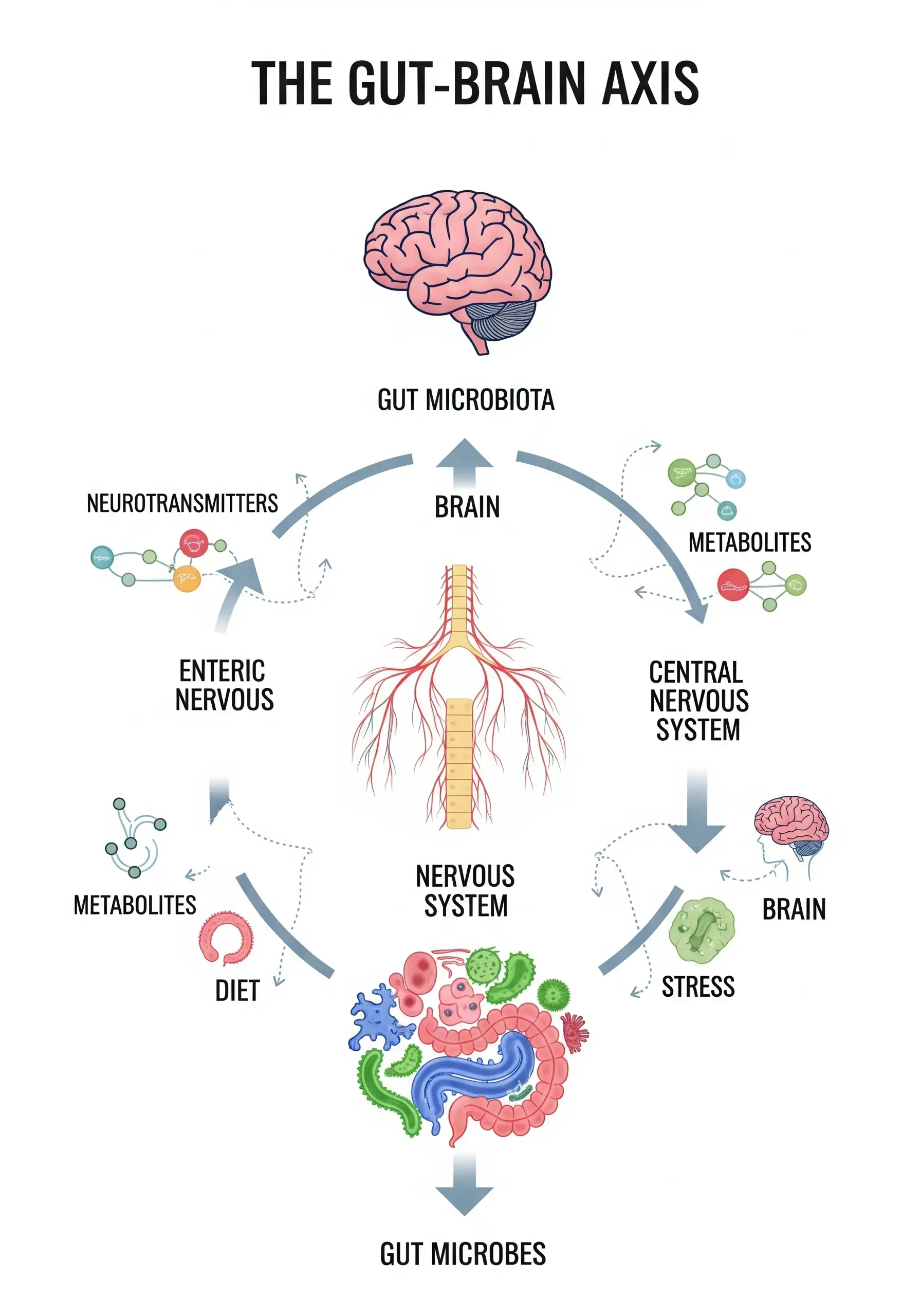
Roughly 80% of your neurotransmitters for happiness start by being formed in the gut.
That's right: you have a whole happiness engine in you that no one told you about, and it's going to work, or not. And guess what — local seasonal eating helps, and fasting helps, and probiotics help, and making your microbiome top-notch helps. Just adding sourdough versus normal bread can do wonders here. Adding ghee instead of "not butter" can do wonders as well, as the butyric acid in ghee is a wonder chemical for the gut lining — it helps form the foundation for a healthy microbiome and neurotransmitter creation in the gut, and it puts you, at a high level, into a form of ketosis (a type of fasting state where you burn fats, not other things) in a meaningful, fun way that changes mood and temperament and digestion in general.
So are you convinced?
Eat less, but only at the right times. And eat well and heal the rest. And make sure it's whole, local foods, in season, from good people with good soil and good plans for the future. Do this and see what you feel. Drop a line if you like with comments.
Till next time,
-Jonathan
(This is an article and doesn't stand in for medical advise)